🧪HUMAN BODY SYSTEMS
🔁 Flipped Classroom: Be The Teacher!
🎥 Record a short video where you:
- Show a drawing of a body system and describe each part
- Teach what a body system is
- Explain how one system (like the circulatory or digestive) works
- Compare your body to a car or machine
📌 What Is A Body System?
- A body system is a group of parts (like organs) that work together to do a special job in your body.
- Just like a team, each system has its own job, but they all help the body work properly.
- For example: Your digestive system breaks down food, your heart pumps blood, and your lungs help you breathe.
📌 Why Are Body Systems Important?
- All body systems work together to keep you healthy and strong.
- Your lungs help you breathe, your heart pumps blood, and your brain tells your body what to do.
- It’s like a sports team, everyone has a role so the team can win!.
| 🌍 Real-World Link: Just like how a car needs tires, fuel, and a steering wheel to move—your body needs all systems working together too!. |
📌 Nervous System
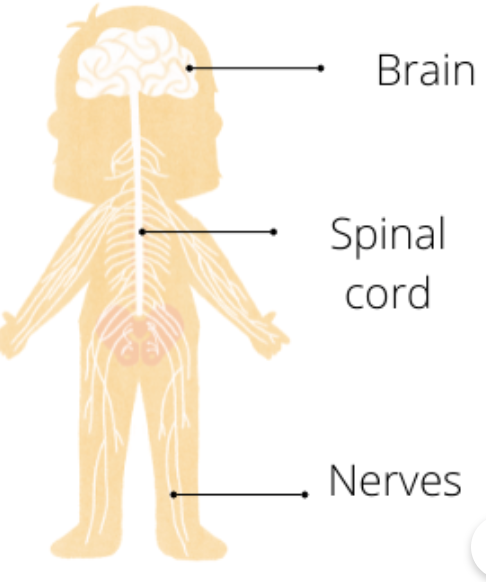
- Your brain is the boss. It controls everything you do—thinking, moving, feeling.
- Nerves are like wires. They carry messages from your brain to your body and back.
- When you touch something hot, your nerves quickly tell your brain, and your hand moves away!.
- Below, you can see the main components of your Nervous System!.
| 🌍 Real-World Link: It’s like a walkie-talkie sending messages between people quickly. |
🌐 International Mindedness
Every person, no matter where they live, how old they are, has the same basic nervous system, it’s one thing all humans all around the world share.
🛠️ATL Skills in Action: Thinking Skills
Noticing how your body reacts when you touch something hot or cold, is an example of utilising thinking skills to approach your learning.
| 🧩 Fun Fact: Your brain has about 86 billion nerve cells! |
📌 Circulatory System
This system is basically your body’s very own delivery system.
- Your heart pumps blood all around your body.
- Blood carries oxygen and food to your body parts.
- It also picks up waste to carry it away.
- Below, you can see the main components of your Circulatory System!.

| 🌍 Real-World Link: Ambulances use machines to monitor heart rate, that’s checking your circulatory system in action! |
| 🛠️ ATL Skills In Action: Research Skills – Use tools to listen to your heartbeat or count your pulse. |
| 🧑🎓 IB Learner Profile: Caring You care about your heart by eating healthy and staying active. |
| 🧩 Fun Fact: Your heart beats about 100,000 times a day! |
📌 Respiratory System
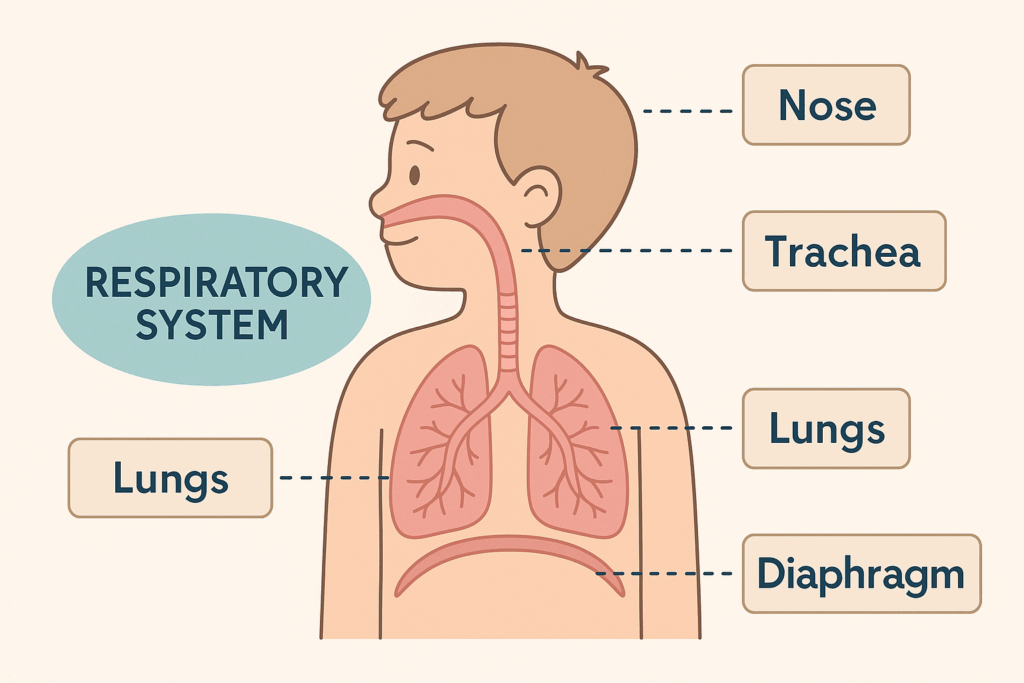
- Helps you breathe in Oxygen and breathe out Carbon Dioxide.
- Your lungs take in fresh air and clean it for your body.
- Breathing keeps all the systems working right!
Main Components:
- Nose
- Trachea (Windpipe)
- Lungs
- Diaphragm (Breathing Muscle)
- Below, you can see the main components of your Respiratory System!.
| 🌍 Real-World Link: People who run marathons have strong lungs!, for example Usain Bolt, the world’s fastest runner must have very strong lungs. |
| 🛠️ ATL Skills in Action: Communication Skills – Share how deep breathing helps calm the body. |
| 🧑🎓 IB Learner Profile: Inquirer Ask questions like “Why do we breathe faster when we run?” |
| 🧩 Fun Fact: You take about 20,000 breaths each day! |
📌 Digestive System
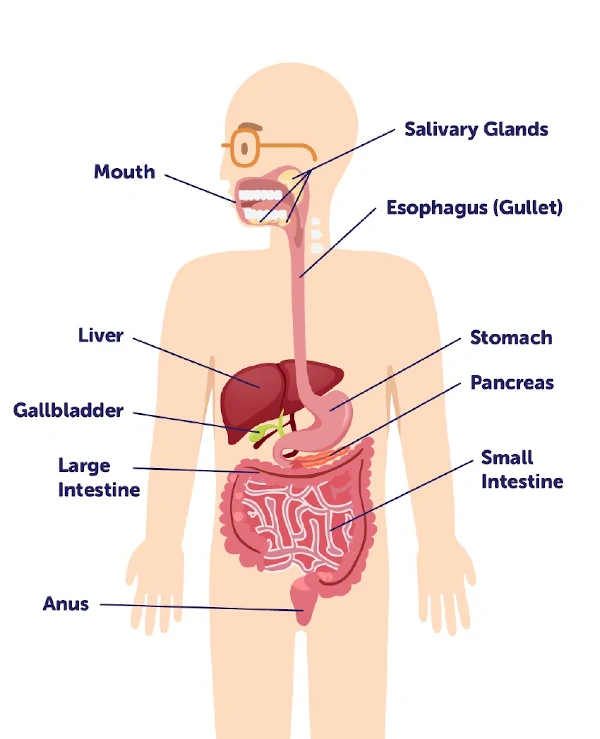
This system turns food into energy your body can use.
- Your mouth chews, your stomach churns, and your intestines absorb the nutrients.
- What you eat helps you grow strong and stay active!
Main Components:
- Mouth
- Esophagus (Food Pipe)
- Stomach
- Small and large intestines
| 🌍 Real-World Link: Chefs and nutritionists help keep this system healthy by teaching about good food. |
| 🛠️ ATL Skills In Action: Self-management Skills – One way you can apply this knowledge is by making healthy snack choices all by yourself! |
| 🧑🎓 IB Learner Profile: Balanced – Eating the right foods helps all your body systems. |
| 🧩 Fun Fact: Your small intestine is over 6 meters long! |
📌 Muscular System
This system helps you move and lift things.
- You have over 600 muscles in your body.
- Muscles help you move, stretch, smile, and even blink!
- They work with your bones so you can run, jump, and lift.
- When you jump, run, or smile, your muscles are working!.
- Jumping uses your leg muscles.
- Smiling uses your face muscles.
- Lifting your backpack uses your arm muscles.
Main Parts:
- Muscles (skeletal, smooth, and cardiac)

🌐 International mindedness
Dancers and athletes around the world use muscles in amazing ways unique to their cultures.
| 🛠️ ATL Skills In Action: Thinking Skills – Guess which muscles you use when climbing stairs, if you can guess the answer then this means you used your thinking skills |
| 🧑🎓 IB Learner Profile: Risk-taker – Trying a new sport helps you use and learn about your muscles. |
| 🧩 Fun Fact: It takes 17 muscles to smile and 43 to frown! |
🧪 Activity: Build A Body Map!
What You’ll Need:
- Big sheet of paper.
- Crayons or markers.
- Labels or arrows.
Steps:
- Draw the shape of a human body.
- Add the heart, lungs, and stomach in the right places.
- Use arrows to show what each part does and how they work together.
🎥 Record a short video of you showing your diagram and explaining it.
✍️ REFLECTION CORNER
- What did I learn about my body today?
- Which system did I like learning about the most? Why?
- What can I do differently now that I know more about how my body works?